


Op-ed response to County Executive Jen Metzger’s address
By Helen Rebekah Garber, FNP-C
The deaths of Mindy Brugger, Brianna Wittl, Alberta Dale, and Nicole Perez demand more than recognition of the devastating impact of domestic violence in Ulster County. We need to look honestly at what happened before these deaths, where opportunities to intervene existed, and what we can do differently.

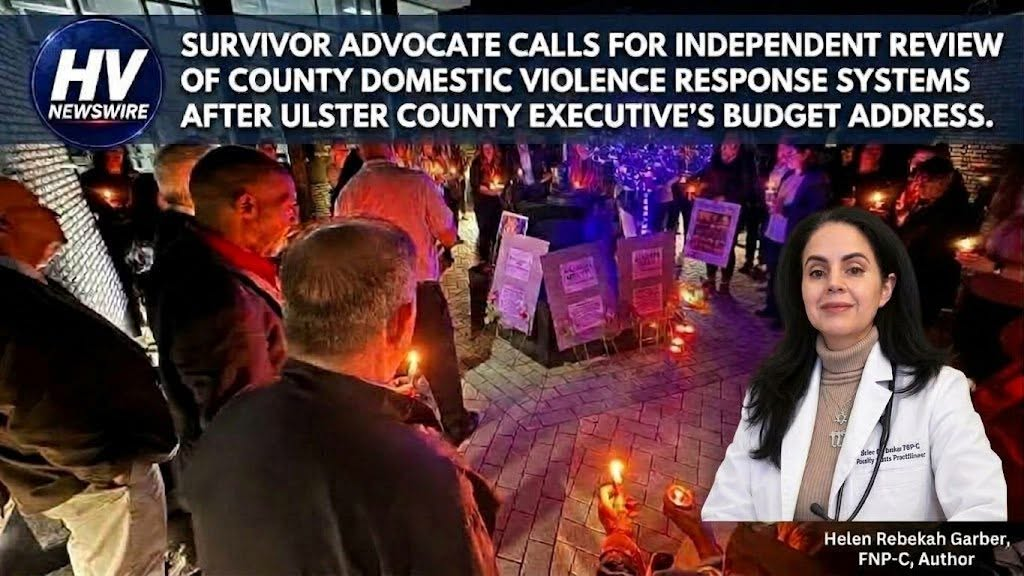
On September 15, survivors came before the Ulster County Legislature and publicly described their experiences with domestic violence and what happened when they sought help. Afterward, survivors and community members gathered at a vigil where more stories were shared. Across both events, over two dozen people spoke.
Their circumstances were different, but their message was remarkably consistent: they asked for help, often repeatedly, and most described being dismissed, demeaned, and re-traumatized by the very systems they turned to for protection. They described a recurring pattern in which the response did not make them or their children safer, but instead allowed the abuse to continue and, in some cases, become amplified through the systems intended to protect them.
As a healthcare provider in this community, I began noticing similar patterns among patients and families. Over the past two years, I have spoken with dozens of survivors and reviewed records they voluntarily shared with me.
They did what we tell victims to do: report the abuse, contact advocates, go to law enforcement, seek orders of protection, and turn to the courts. Yet many describe leaving those systems feeling less safe, not more.
For two years, I have brought these concerns and supporting evidence to local, state, and federal officials. I have filed complaints, brought survivors forward to testify, submitted civil rights complaints to the Department of Justice, and traveled to Washington, D.C., to speak with lawmakers working on legislation to protect victims and their children. Yet I have not seen a meaningful investigation of the broader patterns these survivors are describing in Ulster County.
This is why I believe we need a different approach. The changes I am advocating for come directly from listening to survivors and identifying the patterns across their experiences. Survivors are identifying where interventions failed, where warning signs were missed, and where systems intended to protect them instead left them feeling more vulnerable. They are not simply telling us what happened to them.
They are giving us information that can help identify where change is needed. I appreciate Ulster County Executive Jen Metzger acknowledging the seriousness of domestic violence and the work already underway.
But as new initiatives move forward, survivors and survivor-led advocates must have a meaningful place in shaping the response. We should not design solutions for survivors without listening to what survivors themselves are telling us needs to change.
The question now is simple: Have our existing interventions been effective, and are we willing to change course when survivors tell us they have not?
I am asking the County Executive and Legislature to request appropriate state-level fatality reviews of eligible domestic-violence-related deaths and support an independent examination of the recurring concerns survivors are raising about local systems. Examine prior requests for help, protective orders, reported violations, warning signs, and agency responses. Give survivors a meaningful role in that review, publish appropriate findings, and turn those findings into corrective actions with accountability and deadlines.
This is not about assigning blame to every person working within these institutions. It is about examining outcomes and having the courage to change what is not working. Survivors have identified the problems and shown us the patterns.
Now we need to take what they are telling us seriously and act on it—not continue the same approaches and expect different results.
Ulster County has an opportunity to build something better: an approach shaped not only for survivors, but with survivors. When survivors speak, we must do more than listen. We must act.
Helen Rebekah Garber, FNP-C
Port Ewen